
Common situations and requests
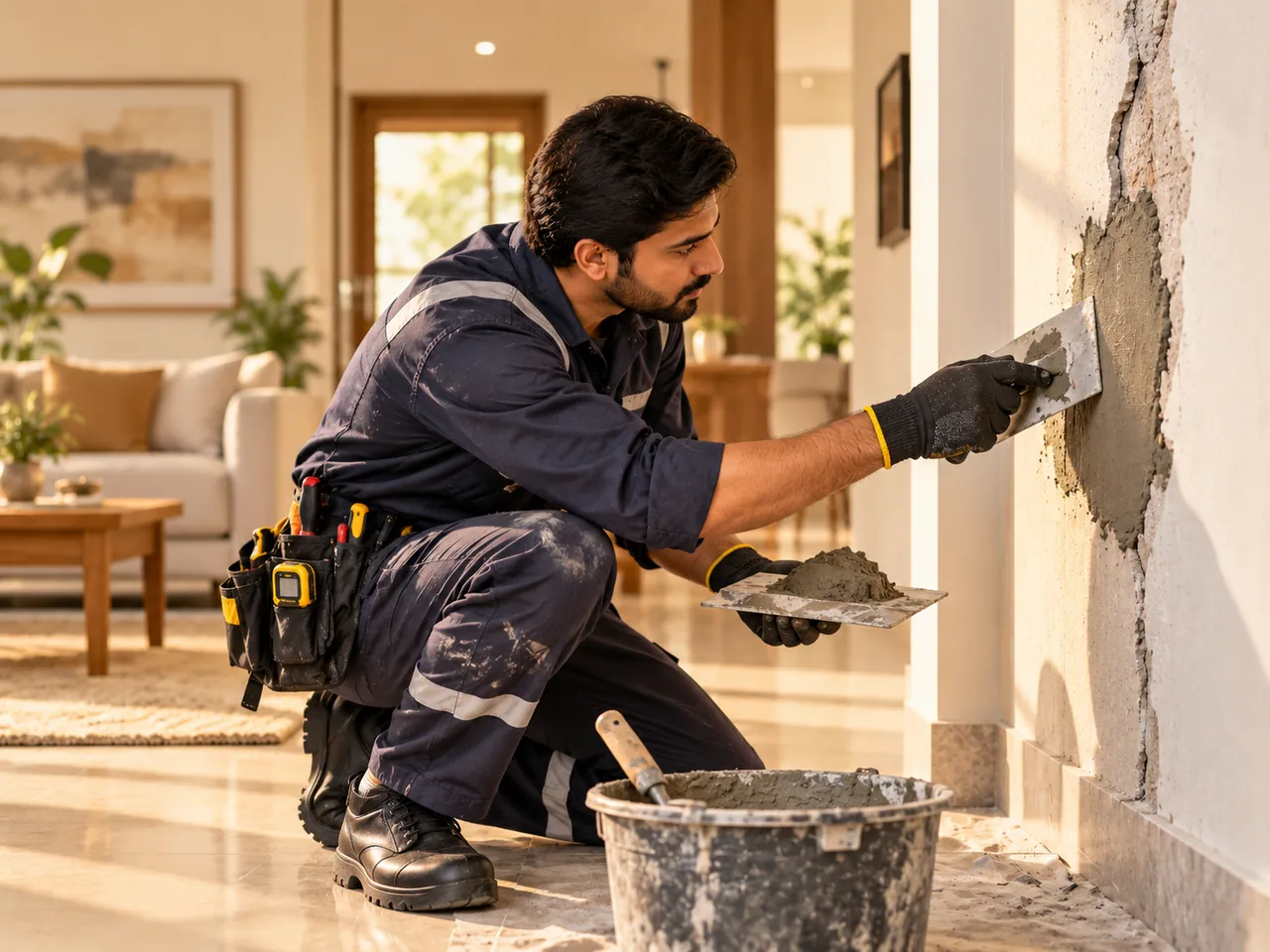
Plaster defects
Note whether plaster is hollow, detached, damp, flaking or cracking.
Tile damage
Record loose tiles, grout deterioration, water exposure and substrate concerns.
Cracks and settlement signs
Observe crack location and changes; significant or widening cracks require qualified assessment.
Roof and wall moisture
Look for wet patches or recurring staining and ask for the water source to be diagnosed.
What to clarify with a professional
Condition assessment
Separate cosmetic surface issues from defects that may involve structure or water ingress.
Defined repair area
Specify repair boundaries, removal, disposal, substrate preparation and finishing.
Materials and curing
Ask about compatible mortar/plaster/tiles, curing conditions and protection of adjacent finishes.
Safety and approvals
Discuss structural review, height work, utilities and local permissions where relevant.
Before agreeing to repairs
Confirm whether the issue is cosmetic or may affect structural safety, who will inspect it, and how repaired areas will be protected while materials cure.
Prepare an accurate request
Record the location, approximate size and pattern of visible cracks, detached plaster, loose tiles or dampness. Note when changes first appeared, whether doors or windows have shifted, and whether recent rainfall or plumbing leaks coincide. Take safe photos without touching unstable masonry or entering damaged areas.
Costs and quotation factors
A masonry quotation should separate inspection, demolition or removal, base preparation, mortar/plaster specifications, tile or brick materials, waterproofing interfaces, debris disposal, curing time and finish restoration. Compare like-for-like scopes instead of accepting a square-foot rate without defined materials and substrate conditions.
Safety and limitations
Large, widening or sudden cracks, sagging surfaces or falling concrete need prompt assessment by an appropriately qualified structural professional. Do not chip load-bearing members or cover significant cracking with cosmetic plaster before the cause is assessed.
Frequently asked questions
Can a crack be repaired with plaster alone?
Not always. Cracks that widen, recur, or appear with movement or water damage may need structural assessment before any surface repair.
What should a masonry quotation specify?
Ask for the assessed cause, materials, area and depth of repair, preparation, curing, waste handling and who restores the finish.
Related practical guides
Use the masonry problem guide for describing plaster defects, seepage and tile damage. If moisture originates from pipes, pair it with plumbing guidance rather than treating every stain as a masonry-only issue.
About Athoo
Athoo is building a Pakistan-focused home-services marketplace. This page helps users understand the service category and prepare informed questions; it does not offer an appointment, fixed price or confirmed city coverage.
Athoo is in development. This page provides service-planning information; it does not confirm bookings, provider availability, prices or emergency response.