
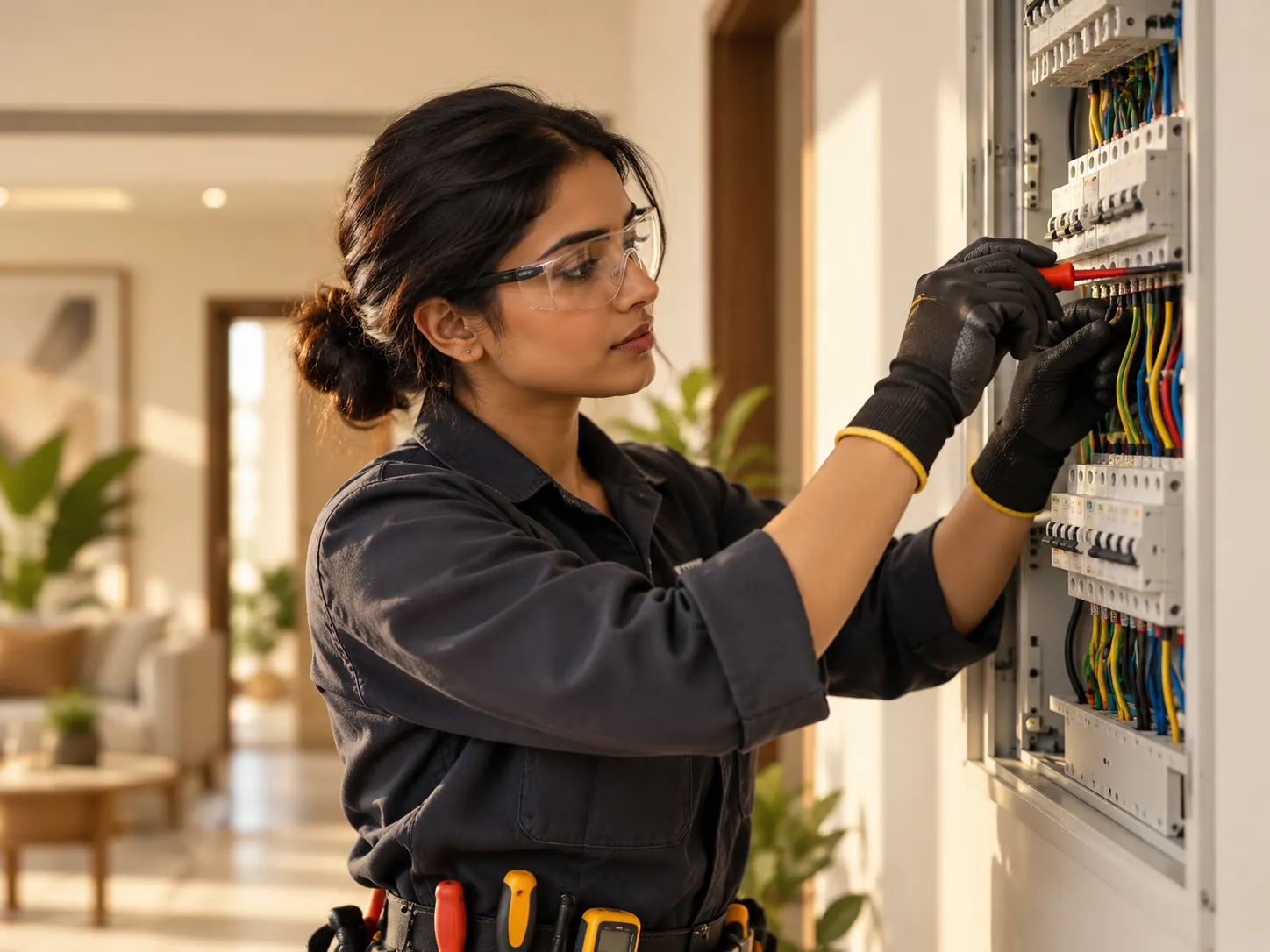
Gather the basic system details
Note whether the setup includes rooftop solar panels, a hybrid or standard inverter, a UPS, batteries or a grid connection. Record brand and model details, the display warning if visible, and approximately when the system was installed or last serviced.
Explain what happens during a power outage: is there no output, short backup duration, an alarm, an unexpected shutdown or a particular appliance causing overload? Describe the pattern without bypassing protections.
Treat electrical and battery safety seriously
Even when the mains supply is off, solar panels and batteries can carry dangerous energy. Do not touch exposed DC wiring, open inverter enclosures, disconnect live connectors or work on elevated rooftop equipment without appropriate training and protection.
If there is smoke, heat, unusual battery swelling, leakage or sparking, keep people clear and seek qualified emergency or technical assistance. Ventilation, battery chemistry and manufacturer requirements are important safety considerations.
Describe the performance issue precisely
For low backup time, note the usual load and approximate duration before shutdown, without running unsafe tests. For a warning message, record the exact text or code. Mention whether the fault occurs only during grid outages, sunny hours or after certain appliances are switched on.
Ask whether the technician can review the load, battery condition, wiring protection, inverter settings and installation documentation as appropriate; a single symptom does not prove which part has failed.
Plan qualified inspection and follow-up
Confirm the technician has relevant experience with the equipment type and that any grid-related or regulated work follows applicable utility and safety requirements. Discuss inspection costs, potential parts and approval before replacements.
After service, ask for an explanation of the cause, tests performed, safety checks completed and any monitoring steps that are safe for a household user. Keep installer and warranty documents.
Request-preparation checklist
Gather what you can safely observe so the right specialist can assess the request, rather than guessing at parts or treatments.
- Solar/inverter/UPS type and brand/model
- Visible fault code or alarm details
- When the fault occurs and affected appliances
- Battery type or warranty documentation if available
- Safe access information; no opening live components
Example: describing a backup failure
“During a grid outage, the inverter displays an alarm and backup shuts off quickly. The inverter model and visible error code are available. The symptoms started after a long outage; I have not opened the inverter or touched DC connectors.” Record the timing and affected appliances, not guesses about batteries or wiring.
If the problem includes hot sockets, sparking or general household circuit faults, also review the electrician safety guide and seek qualified assistance. The free request brief template offers a printable structure for sharing this information.
Frequently asked questions
Why does a UPS battery backup seem shorter than before?
Changes in connected load, battery age, charging conditions, temperature or settings can reduce backup duration. Record the load, displayed warning messages and approximate runtime. Avoid opening batteries or modifying wiring; a qualified technician can test the system safely.
What information helps explain a solar inverter fault?
Note the inverter model, exact alarm code, when it appears, recent weather and whether the issue affects grid supply, solar generation or battery backup. Share a photo of the display rather than attempting unsafe resets, rewiring or live electrical checks.
Can solar panels still produce electricity when the grid is down?
Panels can generate electrical energy with sunlight even during outages. System behavior varies, so do not assume any wiring is safe to touch.
Does short backup time always mean the battery is bad?
No. Loads, settings, battery condition and other system faults may affect backup time; appropriate diagnosis is needed.
Can I reset or rewire an inverter after repeated alarms?
Follow only manufacturer-approved user instructions. Repeated or serious faults warrant qualified inspection, not improvised wiring changes.
Pre-launch notice: Athoo is a Pakistan-first home-services app in development. This page is general service-planning information, not a live booking, confirmed provider listing, price quote or availability promise. Use appropriately qualified help and emergency services where needed.